A Wardrobe Is a Confession
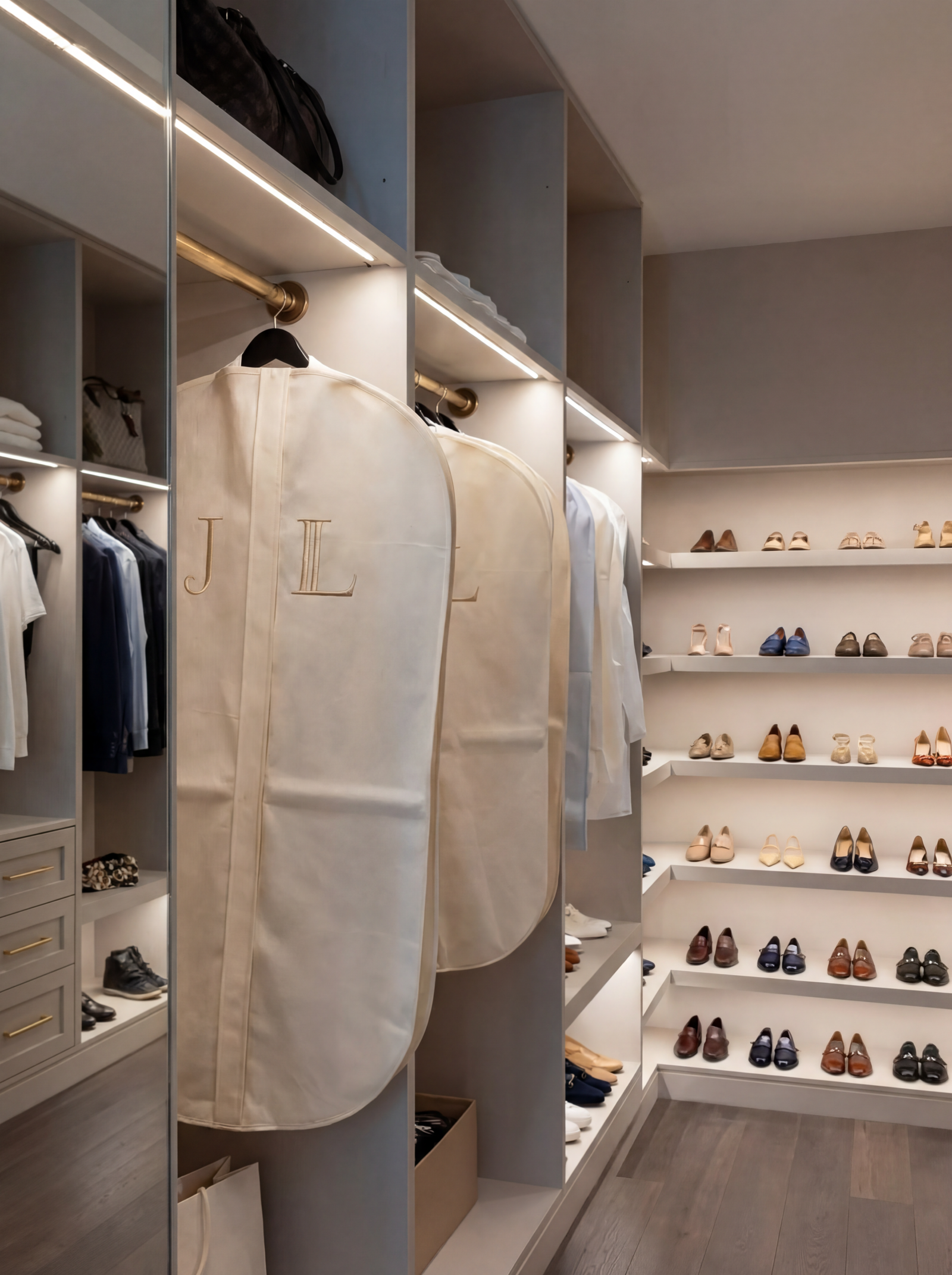
A wardrobe, at its most elemental, is a confession. It is a space where the public persona dissolves and the private self emerges through fabric, cut, colour, and care. For the world’s most influential individuals, the wardrobe is not merely a room where clothes are stored. It is an archive of identity, a physical autobiography written in silk, wool, and leather.
The architecture of a private wardrobe reveals more about its owner than any red-carpet photograph ever could. It reveals what they preserve and what they discard, what they commission and what they inherit, how they organise their visual identity across seasons, decades, and life chapters. A wardrobe, properly observed, is a map of someone’s relationship with time itself.
How Elite Wardrobes Are Organised: Chronology, Designer, and Colour
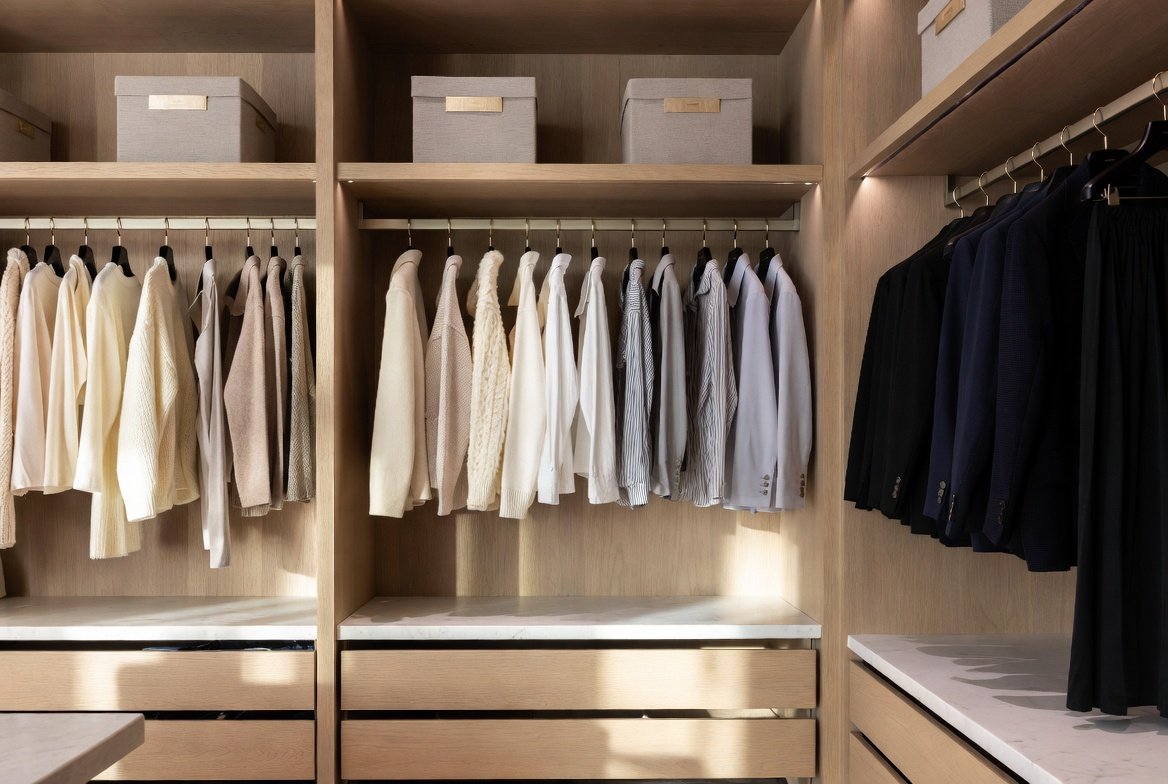
Consider the organisational philosophy. Some wardrobes are arranged chronologically, each section a chapter in the owner’s personal history. Others are organised by designer, creating a visual narrative of loyalty and patronage across houses and eras. Still others are arranged by colour, producing a gradient effect that transforms the closet into a living installation. The choice of organisational system is never arbitrary; it reflects a fundamental approach to memory, identity, and aesthetic discipline.
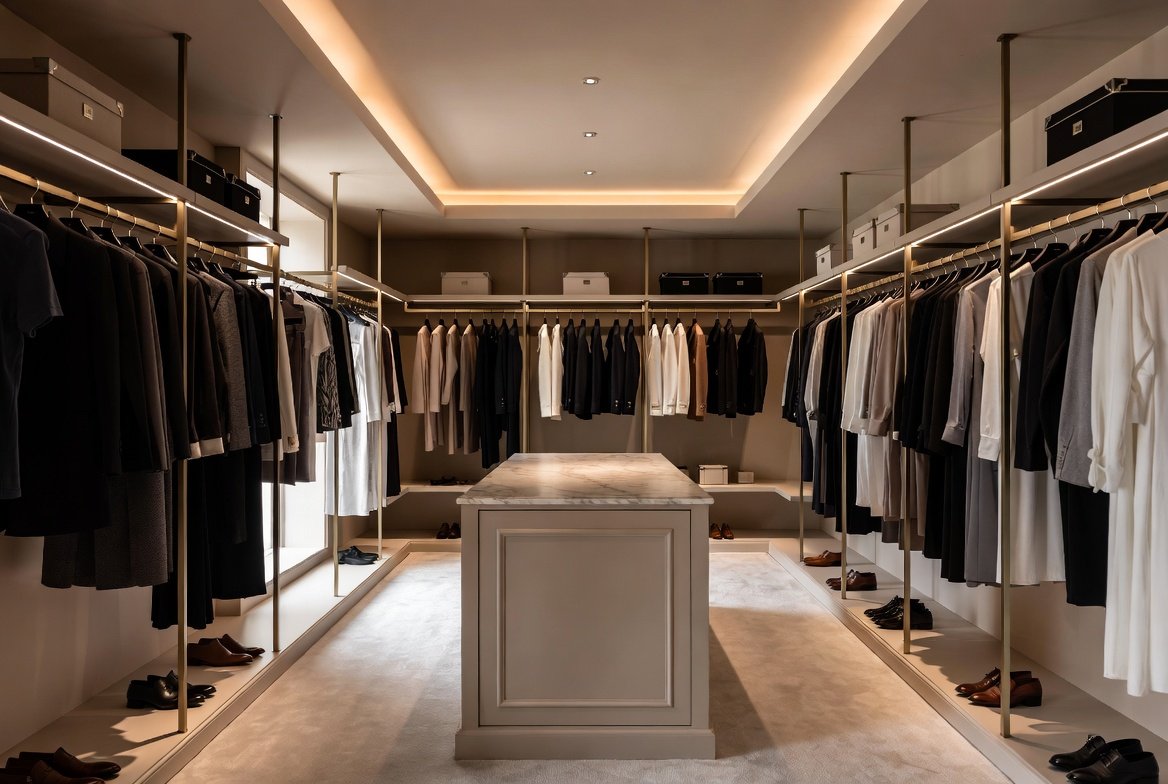
The physical infrastructure of an elite wardrobe is itself a feat of design. Custom cabinetry in sustainably sourced hardwoods. Museum-grade lighting that reveals colour without damaging fabric. Climate control systems that maintain optimal temperature and humidity for textile preservation. Cedar-lined drawers for knitwear. Acid-free tissue for archival garments. Rotating seasonal displays that ensure the wardrobe evolves while its most precious pieces remain protected.
Preservation as Curatorial Practice
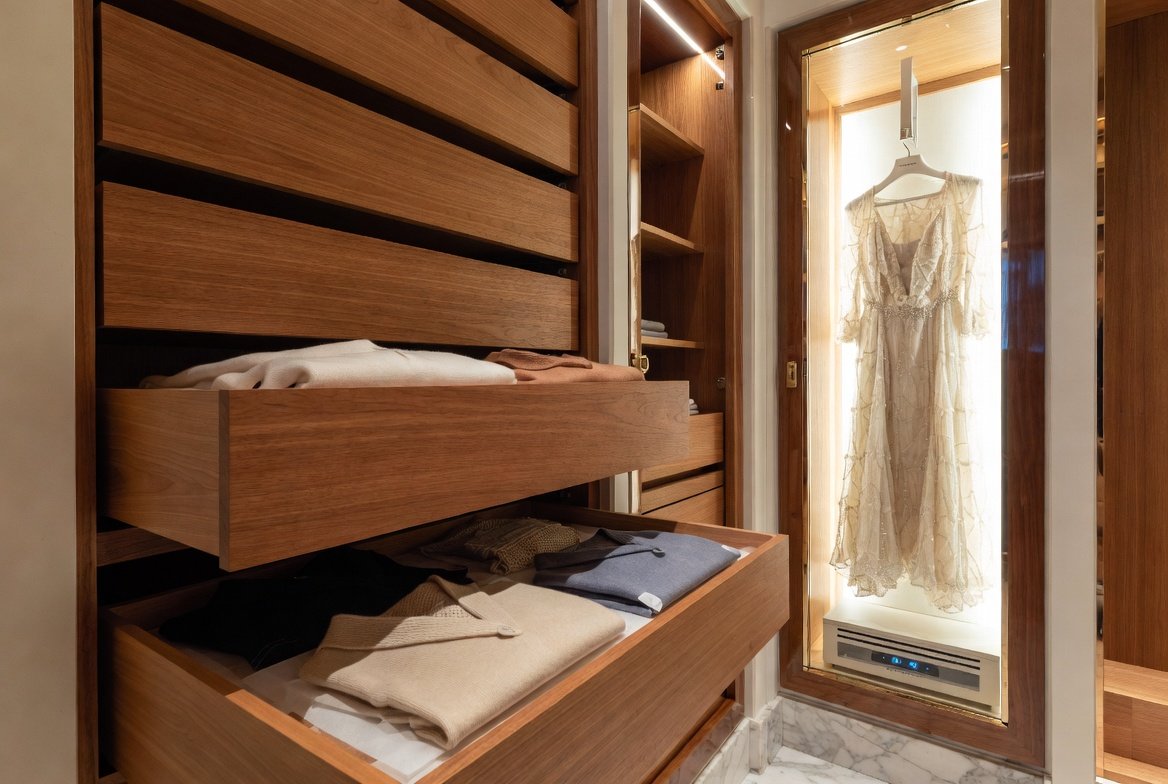
Then there is the question of preservation. At the highest levels, garment preservation is not housekeeping but curatorial practice. Couture pieces are stored in custom garment bags with acid-free paper. Vintage items are catalogued and photographed. Seasonal rotations follow a calendar as precise as any museum’s exhibition schedule. Some wardrobes employ dedicated archivists whose sole responsibility is the care, cataloguing, and restoration of the collection.
The Invisible Ecosystem Behind Every Curated Closet
The private wardrobe also reveals the invisible ecosystem that maintains it. Behind every impeccably curated closet is a team: a stylist who understands the owner’s visual language, a tailor who maintains the fit across years of physical change, a personal shopper who scouts emerging designers and vintage finds, and often an estate manager who ensures the physical space itself meets the collection’s conservation needs.
Intention Over Accumulation
What distinguishes the wardrobe of a truly influential individual from a merely wealthy one is intention. It is not the volume of garments or the aggregate price that matters. It is the coherence of the collection, the evidence of a personal philosophy expressed through material choices. The wardrobe as biography. The closet as philosophical statement.
At In Your Wardrobe, we believe this is a story worth telling with the care it deserves. The private wardrobe is not a topic for listicles or trend reports. It is a subject for long-form, archival-quality editorial that treats clothing not as commodity but as culture.
|
In Your Wardrobe: The Private Wardrobe Editorial Access
Join our free Atelier community to stay connected with the world of quiet luxury and private elegance. For exclusive premium content, insider features, and members-only offers, explore our membership packages.
In Your Wardrobe MembershipExclusive editorial access to private wardrobes, estates, and collections of the world’s most influential individuals. Join our free Atelier community or explore Salon and Archive membership. inyourwardrobe.com/membership |